Code1180
Verified Commits - GPG
Verified Commits - GPG
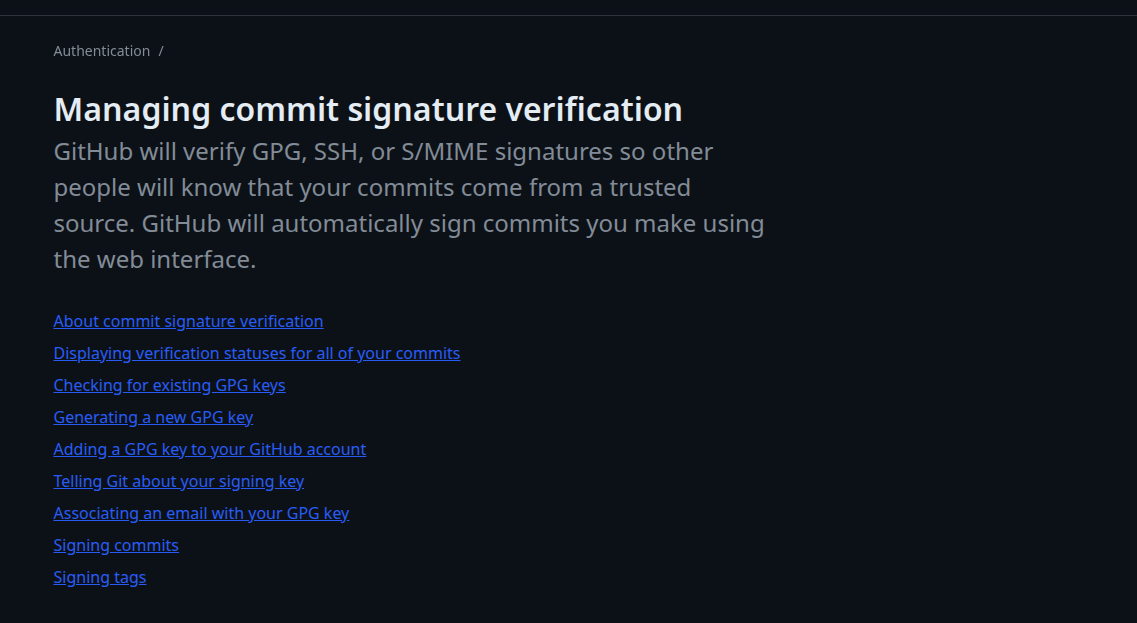
GPG (GNU Privacy Guard) allows you to sign your Git commits, providing verification that the commits actually came from you. This adds an extra layer of security and authenticity to your code contributions.
List Keys
To see your existing GPG keys:
gpg --list-secret-keys --keyid-format=long
This will display all your secret keys with their IDs.
Generate Key
If you don't have a GPG key yet, generate one:
gpg --full-generate-key
Follow the prompts to create your key. GitHub recommends using:
- RSA and RSA (default)
- 4096 bits
- Key does not expire (or set an expiration date)
Configure Git
After generating your key, configure Git to use it:
# Get your GPG key ID
gpg --list-secret-keys --keyid-format=long

# Configure Git with your key ID
git config --global user.signingkey YOUR_KEY_ID

# Enable commit signing by default
git config --global commit.gpgsign true
Add GPG Key to GitHub
- Export your public GPG key:
gpg --armor --export YOUR_KEY_ID
- Copy the output (including the BEGIN and END lines)
- Go to GitHub Settings → SSH and GPG keys
- Click "New GPG key"
- Paste your public key and save
Verify Commits
After setup, your commits will show as "Verified" on GitHub. You can verify a commit locally:
git log --show-signature
Troubleshooting
If you're having issues, make sure:
- Your Git email matches the email in your GPG key
- GPG is properly installed and accessible
- Your GPG key hasn't expired
For more detailed information, see the GitHub documentation.
Conclusion
Signing your commits with GPG adds credibility and security to your Git workflow. While it requires some initial setup, it's a valuable practice for any serious developer.